


About Sprockets.


Thread Starter
Registered User

Joined: Sep 2007
Posts: 92
From: 44124

About Sprockets.
I need information on sprockets. as in, the one i need to get. its for an R6. maybe this has been discussed befor? if so just tell me where to look! , i did a search and came up with nothing. also do you only change out the rear sprocket or the front one also?? the bike will not be used to ride daily so I want to see how big of a sprocket i should get... and why. also who to buy from.?




Registered User
Joined: May 2007
Posts: 81
From: 505
Re: About Sprockets.
and dont buy sprocket specialists!
http://gearedsteelproducts.com/ are some good ****... but heavier than aluminum, obvisouly
http://gearedsteelproducts.com/ are some good ****... but heavier than aluminum, obvisouly

Registered User
Joined: Jul 2007
Posts: 728
From: Lancaster, PA
Re: About Sprockets.
you shouldn't go too much down on the front, puts more stress on the chain. but he's saying for your sprockets and chain to wear evenly its best to change both sprockets and your chain even if you staying with stock size in the front. got it?
Thread Starter
Registered User
Joined: Sep 2007
Posts: 92
From: 44124
Re: About Sprockets.
ok if i stay stock in the front. and go up in the rear , whats the most i can go up.... im trying to go AS SLOW AS POSSIBLE on wheelies so whats the biggest sprocket i can get? a 74?
Waiting For Email Confirmation
Joined: Dec 2005
Posts: 619
From: Toronto
Registered User

Joined: Apr 2007
Posts: 5,628
From: Chi-Town
Re: About Sprockets.
Ok check it out
chain sizes: 530,525, 520....these are the respective sizes of chain that are on most sport bikes, litre bikes come with 530, 600's come with 525, and 520 is usually a conversion. Some people recommend to stick with 525 width while others convert to 520. 520 is lighter therefore less parasetic (sp) drag. which roughly equate to less drivetrain loss or more usable tq across the rpm's
sprockets....likewise the size of the sprocket will reflect on the chain as well such as a 520 sprocket, 525 sprocket, and 530 sprocket...YOU MUST CHOOSE THE APPROPRIATE SIZE SPROCKET FOR THE RIGHT CHAIN....520 CHAIN WITH 520 SPROCKET OK?
Furthermore, as far as sprockets go like said it is good to replace both the front and rear sprocket and chain all at the same time. Over time the chain and sprockets form a wear pattern and it is important that the sprockets and chain form this pattern together from the start. If you only replace one part of the equation you will get a funky wear pattern and put more stress on your chain and sprockets and wear them out faster.
Again, it is possible to do most all slow stuff with stock sprockets, however, going up does make things more steady on idle and it makes more technical tricks "easier" if you will.
"going up": this roughtly means increasing the size of the sprocket...this can be achieved 2 ways but fro stunting only one way is truely used. YOu can go DOWN teeth on the front sprocket...for every 1 tooth you remove on the front sprocket that is roughly equivelant to going UP almost 3 teeth on the back sprocket.....Likewise the other method is to simply increase the teeth on the back sprocket......example if you want to add 5 teeth to your bike you can go -1 and +2 or go simply +5.
For sizes for starters I currently run -1/+9 or a combined UP 12 on my 600rr....top speed sits somwhere around 120ish in 6th at rev limiter
Going down in the front increases tq while going up in the back increases engine braking due to the larger sized sprocket. It is better for stunting to increase the engine braking, so if i were you id jus go up solid in the back such as getting a 55 tooth rear or something along those lines...engine braking is very important.
websites to check sprocket specialists....I have never had a problem with them
or if you ahve the coin to spend deff go with geared steel, they are the best out and last the longest, you can choose either aluminum or steel, and choose between dirt grooves or just regular style sprockets.....
Hope this helped, I remember how confusing it was when I first was learning all this ****
chain sizes: 530,525, 520....these are the respective sizes of chain that are on most sport bikes, litre bikes come with 530, 600's come with 525, and 520 is usually a conversion. Some people recommend to stick with 525 width while others convert to 520. 520 is lighter therefore less parasetic (sp) drag. which roughly equate to less drivetrain loss or more usable tq across the rpm's
sprockets....likewise the size of the sprocket will reflect on the chain as well such as a 520 sprocket, 525 sprocket, and 530 sprocket...YOU MUST CHOOSE THE APPROPRIATE SIZE SPROCKET FOR THE RIGHT CHAIN....520 CHAIN WITH 520 SPROCKET OK?
Furthermore, as far as sprockets go like said it is good to replace both the front and rear sprocket and chain all at the same time. Over time the chain and sprockets form a wear pattern and it is important that the sprockets and chain form this pattern together from the start. If you only replace one part of the equation you will get a funky wear pattern and put more stress on your chain and sprockets and wear them out faster.
Again, it is possible to do most all slow stuff with stock sprockets, however, going up does make things more steady on idle and it makes more technical tricks "easier" if you will.
"going up": this roughtly means increasing the size of the sprocket...this can be achieved 2 ways but fro stunting only one way is truely used. YOu can go DOWN teeth on the front sprocket...for every 1 tooth you remove on the front sprocket that is roughly equivelant to going UP almost 3 teeth on the back sprocket.....Likewise the other method is to simply increase the teeth on the back sprocket......example if you want to add 5 teeth to your bike you can go -1 and +2 or go simply +5.
For sizes for starters I currently run -1/+9 or a combined UP 12 on my 600rr....top speed sits somwhere around 120ish in 6th at rev limiter
Going down in the front increases tq while going up in the back increases engine braking due to the larger sized sprocket. It is better for stunting to increase the engine braking, so if i were you id jus go up solid in the back such as getting a 55 tooth rear or something along those lines...engine braking is very important.
websites to check sprocket specialists....I have never had a problem with them
or if you ahve the coin to spend deff go with geared steel, they are the best out and last the longest, you can choose either aluminum or steel, and choose between dirt grooves or just regular style sprockets.....
Hope this helped, I remember how confusing it was when I first was learning all this ****

 if hes just learnin wheelies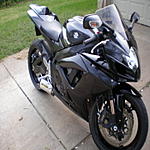
Registered User

Joined: Sep 2007
Posts: 6
From: arlington tx usa
Re: About Sprockets.
Ok check it out
chain sizes: 530,525, 520....these are the respective sizes of chain that are on most sport bikes, litre bikes come with 530, 600's come with 525, and 520 is usually a conversion. Some people recommend to stick with 525 width while others convert to 520. 520 is lighter therefore less parasetic (sp) drag. which roughly equate to less drivetrain loss or more usable tq across the rpm's
sprockets....likewise the size of the sprocket will reflect on the chain as well such as a 520 sprocket, 525 sprocket, and 530 sprocket...YOU MUST CHOOSE THE APPROPRIATE SIZE SPROCKET FOR THE RIGHT CHAIN....520 CHAIN WITH 520 SPROCKET OK?
Furthermore, as far as sprockets go like said it is good to replace both the front and rear sprocket and chain all at the same time. Over time the chain and sprockets form a wear pattern and it is important that the sprockets and chain form this pattern together from the start. If you only replace one part of the equation you will get a funky wear pattern and put more stress on your chain and sprockets and wear them out faster.
Again, it is possible to do most all slow stuff with stock sprockets, however, going up does make things more steady on idle and it makes more technical tricks "easier" if you will.
"going up": this roughtly means increasing the size of the sprocket...this can be achieved 2 ways but fro stunting only one way is truely used. YOu can go DOWN teeth on the front sprocket...for every 1 tooth you remove on the front sprocket that is roughly equivelant to going UP almost 3 teeth on the back sprocket.....Likewise the other method is to simply increase the teeth on the back sprocket......example if you want to add 5 teeth to your bike you can go -1 and +2 or go simply +5.
For sizes for starters I currently run -1/+9 or a combined UP 12 on my 600rr....top speed sits somwhere around 120ish in 6th at rev limiter
Going down in the front increases tq while going up in the back increases engine braking due to the larger sized sprocket. It is better for stunting to increase the engine braking, so if i were you id jus go up solid in the back such as getting a 55 tooth rear or something along those lines...engine braking is very important.
websites to check sprocket specialists....I have never had a problem with them
or if you ahve the coin to spend deff go with geared steel, they are the best out and last the longest, you can choose either aluminum or steel, and choose between dirt grooves or just regular style sprockets.....
Hope this helped, I remember how confusing it was when I first was learning all this ****
chain sizes: 530,525, 520....these are the respective sizes of chain that are on most sport bikes, litre bikes come with 530, 600's come with 525, and 520 is usually a conversion. Some people recommend to stick with 525 width while others convert to 520. 520 is lighter therefore less parasetic (sp) drag. which roughly equate to less drivetrain loss or more usable tq across the rpm's
sprockets....likewise the size of the sprocket will reflect on the chain as well such as a 520 sprocket, 525 sprocket, and 530 sprocket...YOU MUST CHOOSE THE APPROPRIATE SIZE SPROCKET FOR THE RIGHT CHAIN....520 CHAIN WITH 520 SPROCKET OK?
Furthermore, as far as sprockets go like said it is good to replace both the front and rear sprocket and chain all at the same time. Over time the chain and sprockets form a wear pattern and it is important that the sprockets and chain form this pattern together from the start. If you only replace one part of the equation you will get a funky wear pattern and put more stress on your chain and sprockets and wear them out faster.
Again, it is possible to do most all slow stuff with stock sprockets, however, going up does make things more steady on idle and it makes more technical tricks "easier" if you will.
"going up": this roughtly means increasing the size of the sprocket...this can be achieved 2 ways but fro stunting only one way is truely used. YOu can go DOWN teeth on the front sprocket...for every 1 tooth you remove on the front sprocket that is roughly equivelant to going UP almost 3 teeth on the back sprocket.....Likewise the other method is to simply increase the teeth on the back sprocket......example if you want to add 5 teeth to your bike you can go -1 and +2 or go simply +5.
For sizes for starters I currently run -1/+9 or a combined UP 12 on my 600rr....top speed sits somwhere around 120ish in 6th at rev limiter
Going down in the front increases tq while going up in the back increases engine braking due to the larger sized sprocket. It is better for stunting to increase the engine braking, so if i were you id jus go up solid in the back such as getting a 55 tooth rear or something along those lines...engine braking is very important.
websites to check sprocket specialists....I have never had a problem with them
or if you ahve the coin to spend deff go with geared steel, they are the best out and last the longest, you can choose either aluminum or steel, and choose between dirt grooves or just regular style sprockets.....
Hope this helped, I remember how confusing it was when I first was learning all this ****

Thread
Thread Starter
Forum
Replies
Last Post

